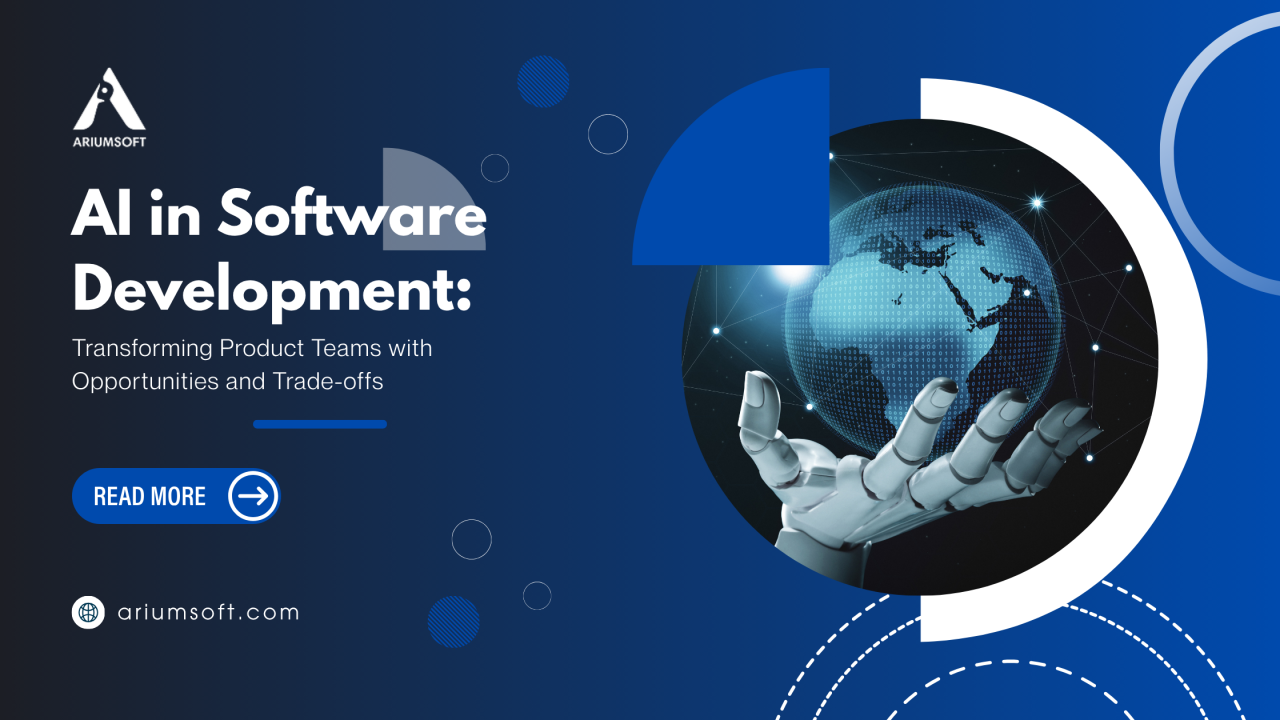
Artificial Intelligence is not something that we will see in the future of software development. It is actually becoming an important part of how teams make and deliver applications nowadays. Artificial Intelligence is changing the way things are done whether it is creating code making tests better or putting applications there. The good things about Artificial Intelligence are really big. There are also some problems that teams need to think about.
This is especially important, for companies that make software and products because they will have to deal with growing fast soon. The decisions they make now will affect how well they can handle this growth in the future. Artificial Intelligence is something that these companies need to consider when they are making plans.
AI is increasingly embedded across the software development lifecycle:
For product teams, this means faster execution, reduced manual effort, and the ability to innovate at a much higher pace. But speed without structure can quickly lead to technical chaos.
1. Accelerated Development Cycles AI tools significantly reduce the time required to write code, test features, and deploy updates. Teams can move from idea to MVP faster than ever before.
2. Improved Developer Productivity Routine and repetitive tasks - such as writing boilerplate code or debugging - can be automated, allowing engineers to focus on higher-value work like system design and innovation.
3. Enhanced Decision-Making AI-driven insights help product teams understand user behavior, optimize features, and prioritize development efforts more effectively.
4. Cost Optimization (When Used Right) AI can help identify inefficiencies in infrastructure usage, optimize workloads, and reduce unnecessary cloud spending.
While AI brings efficiency, it is not a silver bullet.
1. Over-Reliance on AI One of the biggest risks is treating AI as a complete replacement for human expertise. AI-generated code may work in isolation but fail in complex, real-world systems.
2. Lack of Architectural Thinking AI tools focus on solving immediate problems but often lack context around long-term system design. This can lead to fragmented architectures that are hard to scale.
3. Quality and Security Risks AI-generated outputs are not always reliable. Without proper validation, they can introduce bugs, vulnerabilities, or performance issues.
4. Not Fully Autonomous AI cannot and should not handle end-to-end development independently. A human-in-the-loop approach is essential - where engineers validate inputs, guide outputs, and ensure alignment with business goals.
The true complexity arises when AI capabilities are layered onto existing systems.
Many product teams face challenges like:
This is where most teams hit a bottleneck - not because of lack of ideas, but because their systems aren’t designed to support what comes next.
At Ariumsoft, the focus is not just on implementing AI, but on ensuring that systems are built to sustain AI-driven growth.
1. Architecture-First Approach Before integrating AI, it’s critical to evaluate whether the current system can support it. Ariumsoft helps design modular, scalable architectures that prevent future bottlenecks.
2. Cloud Efficiency & Scalability AI workloads can significantly increase cloud costs if not optimized. Ariumsoft works on:
This ensures that growth doesn’t come at the cost of margins.
3. AI-Ready Systems Instead of forcing AI into existing systems, Ariumsoft helps teams build AI-ready pipelines, ensuring:
4. MVP to Scale Journey Whether a team is starting from scratch or already has a product in the market, Ariumsoft supports:
The future of software development is not AI vs humans - it’s AI with humans.
Successful product teams will:
AI can help you move faster, but only strong engineering foundations will ensure you don’t break as you scale.
AI is transforming how products are built, but it also raises the bar for how systems should be designed. For product development teams, the goal is not just to adopt AI - but to adopt it strategically.
Because in the end, success isn’t defined by how quickly you build - it’s defined by how well your system holds up as you grow.
And that’s where the right combination of AI, architecture, and cloud strategy makes all the difference.
.avif)