AI is making writing code easier than ever. It's making everything around the code harder.
Not long ago, a faster developer usually meant faster releases. That was the assumption most of us worked with if engineers could ship features quicker, the business would move quicker. Backlogs would shrink. New ideas would reach customers sooner.
Then AI arrived. And for a moment, it really did look like that assumption was playing out.
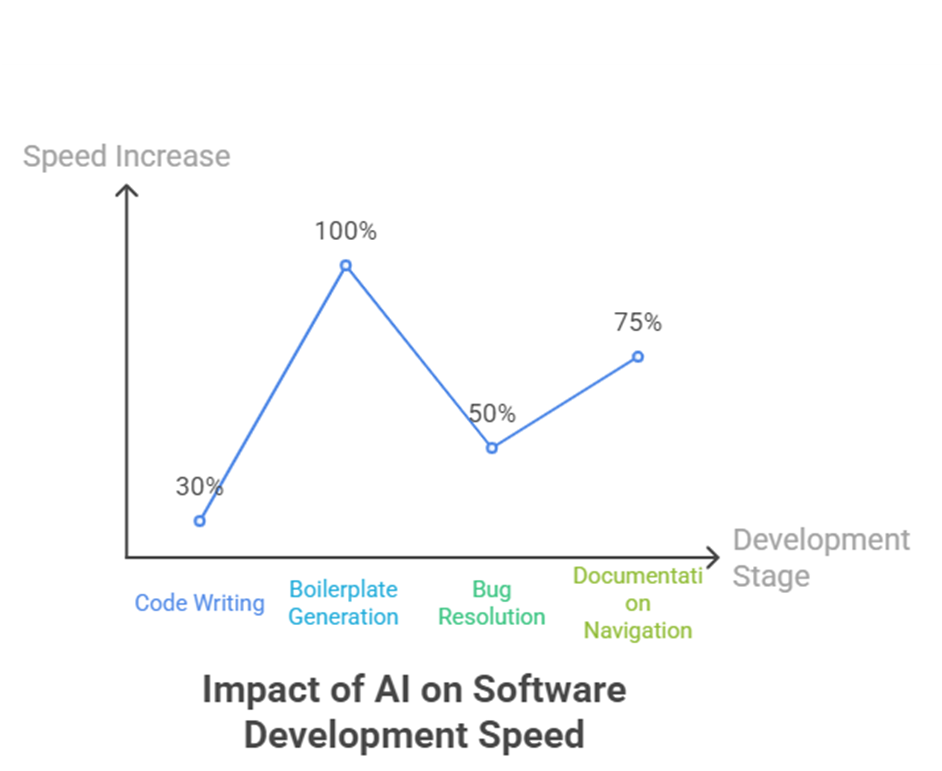
Developers started finishing in hours what used to take days. Boilerplate appeared almost instantly. Small bugs that once derailed an engineer's afternoon were being resolved in minutes. Documentation became something people actually navigated instead of dreading.
Yet something odd happened. Many teams got faster at building software without getting any faster at delivering it. The code was finished and sitting there. Nothing was shipping. Plenty of engineering leads are running into this exact wall right now they just don't always talk about it openly.
More Code Moving Through the System Than Before
One side effect nobody talks about enough is volume. When developers become more productive, they naturally produce more output more features, more pull requests, more experiments, more changes that all need to be reviewed, tested, approved, deployed, monitored, and kept alive.
The coding part speeds up. Everything after it suddenly has more work to absorb.
A senior engineering manager put it plainly: "It's like we widened the entrance to the highway but forgot to widen the rest of the road." The congestion didn't go away it relocated about three steps further down the process.
The Bottleneck Didn't Disappear. It Moved.
Writing code is one step in a longer chain. After that comes the part nobody skips: someone has to review the code, QA has to validate it, security needs a look, integrations get tested, approvals happen, pipelines run, and then someone watches what the monitoring dashboards say.
Slow down any one of those handoffs and the release waits it doesn't matter that the code landed two days ago. AI hasn't removed those activities. If anything, faster arriving changes have made them more load bearing, not less. Teams need more confidence that changes won't break things downstream, not less.
The Productivity Metrics Look Great, and That's Part of the Problem
This is where things get genuinely confusing. Engineering dashboards at many organizations are showing good numbers developers completing work faster, cycle times inside development shrinking, output measurably up compared to a year ago.
By traditional measures, productivity has improved. But when someone in leadership asks whether releases are actually moving significantly faster, the answer usually isn't impressive.
Productivity and throughput aren't the same thing. Speeding up one part of a system doesn't improve the speed of the whole system. Manufacturing figured this out the hard way decades ago. Software teams are working through it now.
A Myth That's Creating Real Frustration
You hear this one often enough that it starts to feel obvious: AI clears delivery bottlenecks. Repeat it in enough strategy decks and it becomes accepted wisdom. It's also not really how bottlenecks behave.
AI helps developers write code faster. It doesn't automatically solve complex architectures, accumulated technical debt, slow review processes, fragile testing environments, manual deployment workflows, or the coordination problems that exist between teams. Those challenges existed before AI arrived. They still exist. The difference is that accelerated development makes every weakness downstream far more visible than it used to be.
Why Some Teams Are Benefiting More
It's tempting to think the biggest winners in the AI era are the ones generating the most code. In practice, many of the biggest gains are happening at organizations that already invested in strong engineering foundations before AI entered the picture teams with reliable CI/CD pipelines, solid automated testing, clear service boundaries, good observability, and well-defined release processes.
When developers get faster in these environments, the rest of the system is ready to absorb it. Changes move through without creating chaos.
Other teams aren't as fortunate. They accelerate development and then discover that testing, deployment, and operations simply can't keep pace. That's when releases start piling up despite improved productivity numbers.
The Question Technology Leaders Are Starting to Ask
A year ago, most conversations went something like: "How do we help our developers move faster?" That question is shifting. More leaders are asking: "Can our engineering system handle developers moving faster?"
It's a subtle change, but it matters. Software delivery has never been purely a coding challenge. It's a coordination challenge, a process challenge, an architecture challenge. An AI assistant that generates code doesn't resolve any of those things on its own.
Where the Real Advantage Is
AI is already reshaping how software gets built. The part that's becoming clearer now is that the biggest advantage won't come from generating more code. It'll come from building organizations that can safely handle more change.
The companies that pull ahead won't necessarily have the fastest developers. They'll have the fewest obstacles between an idea and a successful release and that's a genuinely different problem to solve.
It's why more technology leaders are looking hard at architecture, testing strategies, deployment workflows, and operational processes, not just developer tooling. Teams working with AriumSoft often arrive at the same realization early: improving delivery speed isn't just about helping engineers write faster. It's about making sure everything surrounding that code is ready to move at the same pace.
Because in 2026, writing software is getting easier. Shipping it reliably consistently, safely, at speed that's where the real work is.
.avif)